

How Shutters & Blinds Keep Your Rooms Cool in Summer
The right window covering can make a real difference to how cool your home stays during a heatwave. Here is how shutters and blinds help — and which options work best.
As UK summers get warmer, keeping your home cool without resorting to expensive air conditioning is becoming more important than ever. The good news is that the right window covering can make a significant difference — and you may already have the solution hanging in your windows. Here is how shutters and blinds help keep rooms cool, and which options are most effective.
Why Windows Are the Problem
Up to 87% of a home's heat gain in summer comes through the windows. Glass is an excellent conductor, and when direct sunlight hits it, the heat passes straight through into the room. The larger the window, the greater the effect. South and west-facing rooms are particularly susceptible — they receive the most direct sun during the hottest parts of the day. The key to keeping a room cool is intercepting that solar energy before it has a chance to warm the air inside.
How Plantation Shutters Help
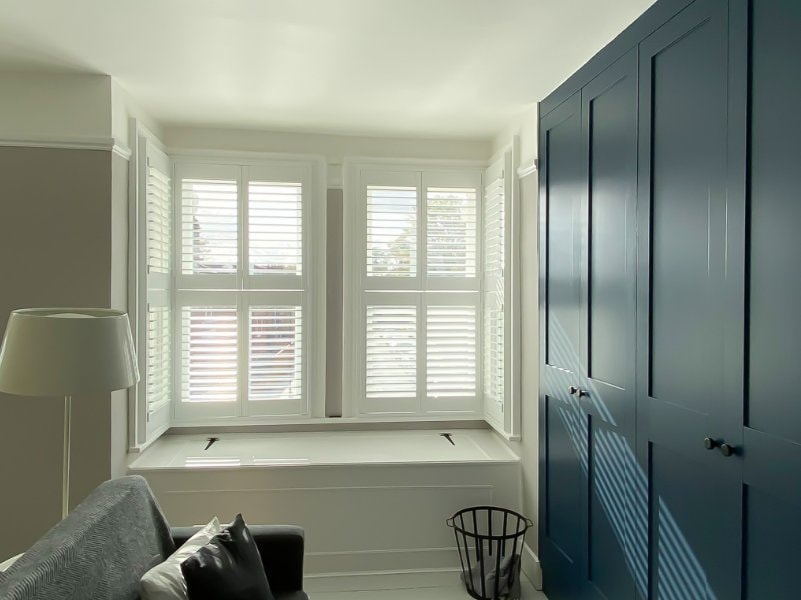
Plantation shutters are one of the most effective window coverings for managing summer heat. The louvres can be angled to deflect direct sunlight away from the room while still allowing airflow — a combination that no curtain or standard blind can match. By tilting the slats upward, you redirect sunlight towards the ceiling rather than into the room, dramatically reducing solar gain without plunging the room into darkness. Because shutters sit within the window recess and cover the full frame, they also create a buffer zone between the hot glass and the room air. This trapped air acts as a partial insulating layer, slowing the rate at which heat transfers inward. On a hot afternoon, a room with well-fitted plantation shutters can feel noticeably cooler than one with no window covering at all.
The Best Blind Options for Keeping Cool
Not all blinds are equal when it comes to heat management. Here is how the main types compare: **Roller Blinds with Reflective Backing** — Some roller blind fabrics are designed with a reflective or solar-control coating on the reverse. These bounce a proportion of the sun's energy back through the glass before it can warm the room. They are a cost-effective option for south-facing rooms. **Venetian Blinds** — Like shutters, venetian blinds allow you to angle the slats to redirect sunlight. Aluminium venetian blinds are particularly effective because the metallic surface reflects heat rather than absorbing it. Wooden venetians offer a warmer aesthetic with similar directional control. **Day & Night Blinds** — The alternating sheer and opaque bands of a Day & Night blind give you fine-grained control over how much direct light enters the room. In summer, keeping the opaque bands aligned with the sun's angle reduces glare and heat without blocking the view entirely. **Roman Blinds** — A roman blind with a thermal or blackout lining provides a reasonable barrier against solar gain when fully lowered. They are not as adjustable as louvred options, but a well-lined roman blind is considerably better than an unlined one.
Timing Matters: When to Close Your Shutters or Blinds
The most effective strategy is to close your shutters or blinds before the room heats up — not after. Once the sun has been pouring through a window for an hour, the room air is already warm and closing the blinds will trap that heat inside. The better approach is to close south and west-facing window coverings in the late morning, before the sun reaches its peak angle, and open them again in the evening once the outside temperature drops. For rooms you are not using during the day, keeping shutters or blinds closed throughout the hottest hours can make a significant difference to the overall temperature of the house.
Combining Window Coverings with Ventilation
Shutters have a particular advantage here: because the louvres can be angled while the panels remain closed, you can maintain airflow through the room while still blocking direct sunlight. Open the louvres slightly to allow a breeze through while keeping the slats angled to deflect the sun. This combination of ventilation and solar control is difficult to achieve with any other window treatment. For maximum cooling effect, combine closed or angled window coverings on sun-facing windows with open windows on the shaded side of the house. This creates a cross-ventilation effect that draws cooler air through the building.
Which Rooms Benefit Most?
**Living Rooms** — South or west-facing living rooms are often the worst affected by afternoon heat. Plantation shutters or venetian blinds with adjustable louvres are ideal, giving you light control without sacrificing the room. **Bedrooms** — A cool bedroom is essential for a good night's sleep. Blackout roller blinds or roman blinds with a thermal lining are effective at keeping bedrooms cool and dark. Pair with a shutter if you want the option of ventilation without light. **Conservatories and Garden Rooms** — These spaces can become unbearably hot in summer. Specialist conservatory blinds — including pleated roof blinds and side blinds — are designed specifically to manage solar gain in glass-heavy spaces. **Home Offices** — Glare on screens is a productivity killer. Venetian blinds or Day & Night blinds allow you to cut out direct sun while keeping the room bright enough to work comfortably.
If you would like advice on the best window coverings for keeping your home cool this summer, we offer free home surveys across Dorset, South Somerset, and East Devon. Get in touch to book yours — we will come to you, assess your windows, and recommend the most effective solution for your home.
Ready to transform your windows?
Book a free home consultation and our team will bring samples, measure up, and give you honest advice — no pressure, no obligation.
Book a Free Consultation